About the Guru
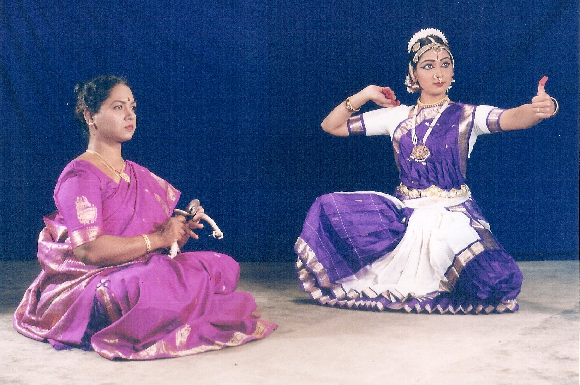
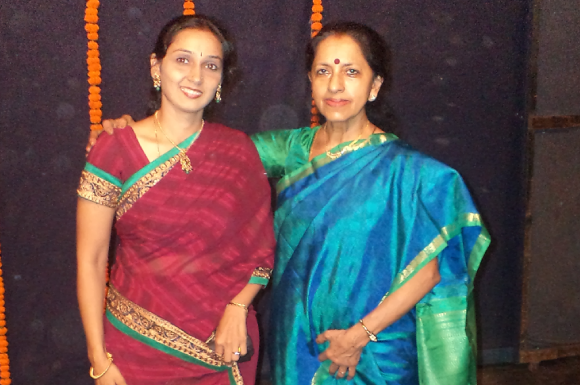
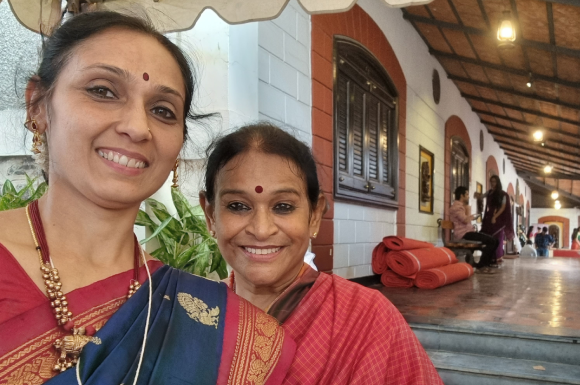
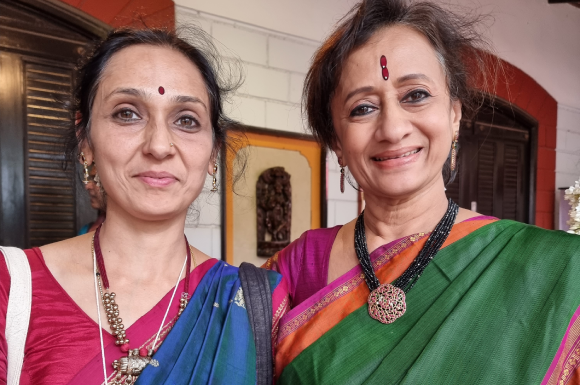
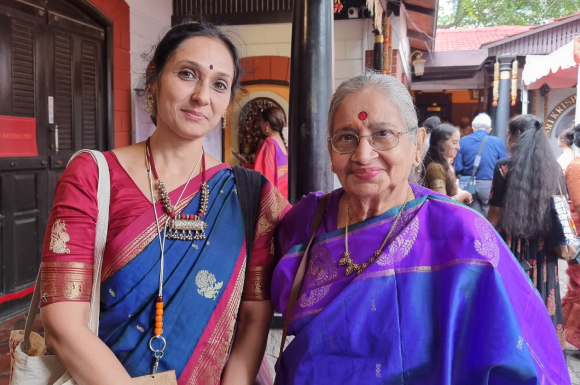
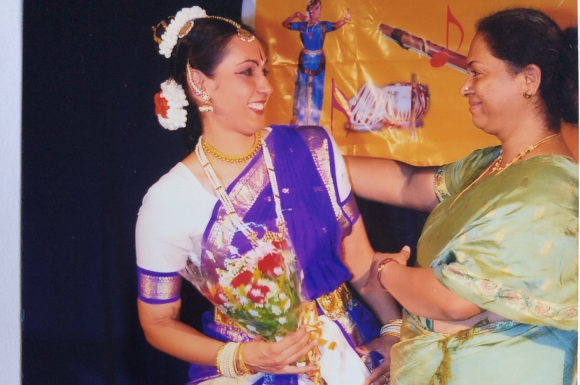
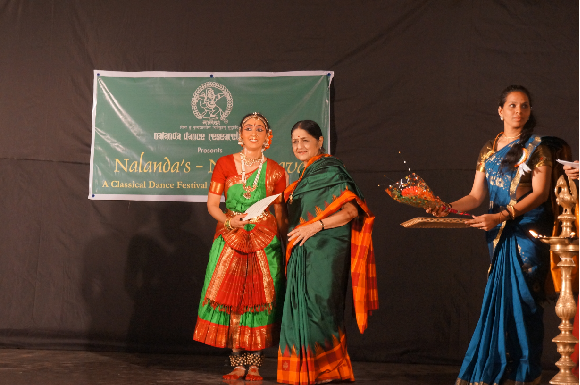
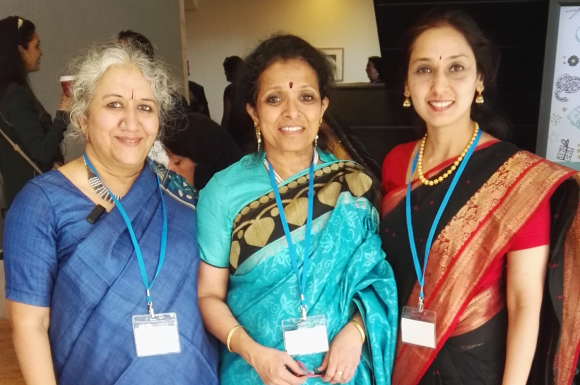
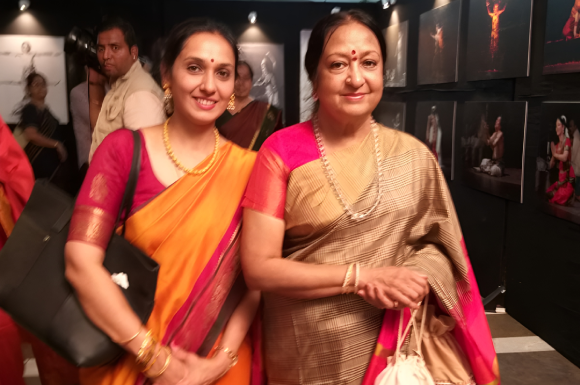
Smt. Parimala Hansoge, Artistic Director of Kalāvāhini Dance Academy, is an accomplished Bharatanatyam artist and a revered teacher whose influence extends across India and beyond. Rooted in the illustrious Kalakshetra style, she trained under eminent Gurus — Kalāyogi Smt. Vandya Srinath (Bangalore) and Guru Smt. Mythili Raghavan (Pune) — and has since nurtured a lifelong mastery of her art.
Her academic and professional credentials reflect a rare blend of tradition and innovation. She is an approved tutor of the Imperial Society of Teachers of Dancing (ISTD), London, holds an MA in Performing Arts from Nalanda Nritya Kala Mahavidyalaya, Mumbai, and an MA in Professional Practice: Dance Technique Pedagogy from Middlesex University, London. Recognised as a “Nritya Nipuna” for her outstanding achievements, she combines scholarly depth with artistic excellence.
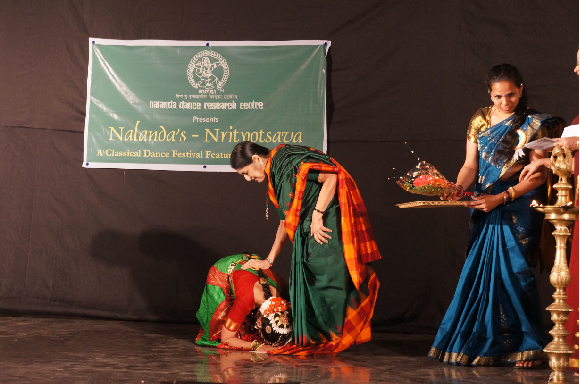
As a mentor, Smt. Parimala has trained a diverse body of students worldwide, guiding them through prestigious ISTD qualifications and leading many to the milestone of Rangapravesha in North Wales, UK, over the past three years. Her students are consistently celebrated for their discipline, artistry, and cultural grounding.
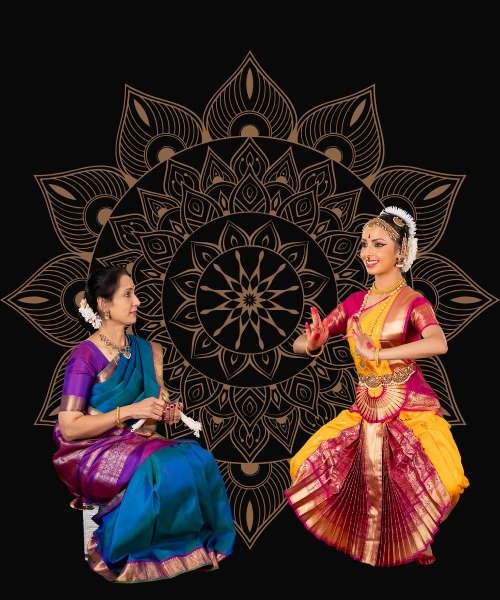
A recognised ICCR empanelled artist, she has represented Indian classical dance internationally, performing and collaborating across the UAE, UK, and US, including at the renowned OJAS Sangam Festival (2021). Through Kalāvāhini Dance Academy, she also dedicates herself to community outreach, enriching cultural awareness and fostering a spirit of philanthropy.
At the heart of her teaching lies a simple philosophy: that Bharatanatyam is a journey of discipline, dedication, and devotion. She believes dance has the power to transform — shaping not just skilled performers, but well-rounded individuals who carry tradition, confidence, and creativity into every aspect of their lives.
Why Kalāvāhini? | Our Philosophy & Vision
At Kalāvāhini Dance Academy, we believe that Bharatanatyam is not just an art form — it is a way of life. Rooted in the ancient wisdom of the Nātya Shāstra and shaped by centuries of tradition, this dance connects movement with meaning, discipline with devotion, and creativity with community.
Our philosophy is simple: to honour the roots while embracing the present. Like the wheel in our logo, we remain grounded in heritage even as we move forward with innovation. Every class at Kalāvāhini is designed to nurture both artistry and character — cultivating discipline, resilience, and self-expression alongside technical mastery.
What makes Kalāvāhini unique is our holistic approach to training. We are affiliated with globally recognised boards like KSEEB and ISTD (London), offering structured qualifications for those who seek them, while also creating space for students who simply wish to experience the joy of dance. Our curriculum integrates technique, theory, Carnatic music, and performance practice, ensuring students develop as complete dancers and thoughtful storytellers.
Vision
We envision Kalāvāhini as more than a dance school. It is a cultural home where tradition and innovation meet, where beginners and advanced students alike can find guidance, and where every dancer is encouraged to embark on their own artistic journey.
Mission
Our mission is to preserve the timeless beauty of Bharatanatyam, inspire future generations, and create a community where dance continues to transform lives — one step, one story, and one soul at a time.
Bharatanatyam
Bharatanatyam which originated in Southern India as a temple dance tradition called DasiAttam (Performed by the Deva Dasis or dedicated Temple Dancers as an offering or Service to the Deity) more than 2000 years ago and is perhaps the most advanced and evolved dance form of all the Classical Indian dance forms.
The name Bharatanatyam is a simple derivation from the four most important aspects of dance (in Sanskrit). These are:Bha from Bhava meaning emotion, Ra from Raaga meaning music or melody, Ta from Taala meaning rhythm and Natyam meaning dance. Thus Bharatanatyam is the dance that encompasses music, rhythm and expressional dance or Abhinaya and strictly adheres to the Nātya Shāstra (the detailed treatise of Classical Indian dance).
All languages are expressive mediums and the dialect and grammar is essential for effective expression. The proper approach to mastering any language is first through the dialect and the mastering of grammar follows. In the terms of Bharatanatyam, the dialect consists of various techniques of expressions and movements. It is only after achieving mastery over the technicalities of basic dance movements like Adavus and Theermanams, the perfection or Angashuddha is attained. Following this the learning of Bharatanatyam enters the next phase of training involving, understanding the complexities of the depiction of a character and intricacies of choreography.